Shin Megami Tensei Nocturne Maniax Chronicle Editions Atlas
•: October 23, 2008 Mode(s) Shin Megami Tensei: Nocturne is a for the. It was developed by, published by Atlus in Japan and North America, and by in Europe. It is the third entry in the Shin Megami Tensei series, the central series in the franchise. Multiple versions of the game have been published: the original version was published in Japan by Atlus in 2003, while a was released in 2004 in Japan. The director's cut was localized and released in North America and Europe in 2004 and 2005 respectively. Nocturne follows the, a high school student in modern-day Tokyo, as he is transformed into a half-demon after the world undergoes Conception, an apocalyptic event triggered by a sinister cult to trigger the world's rebirth in a new form.
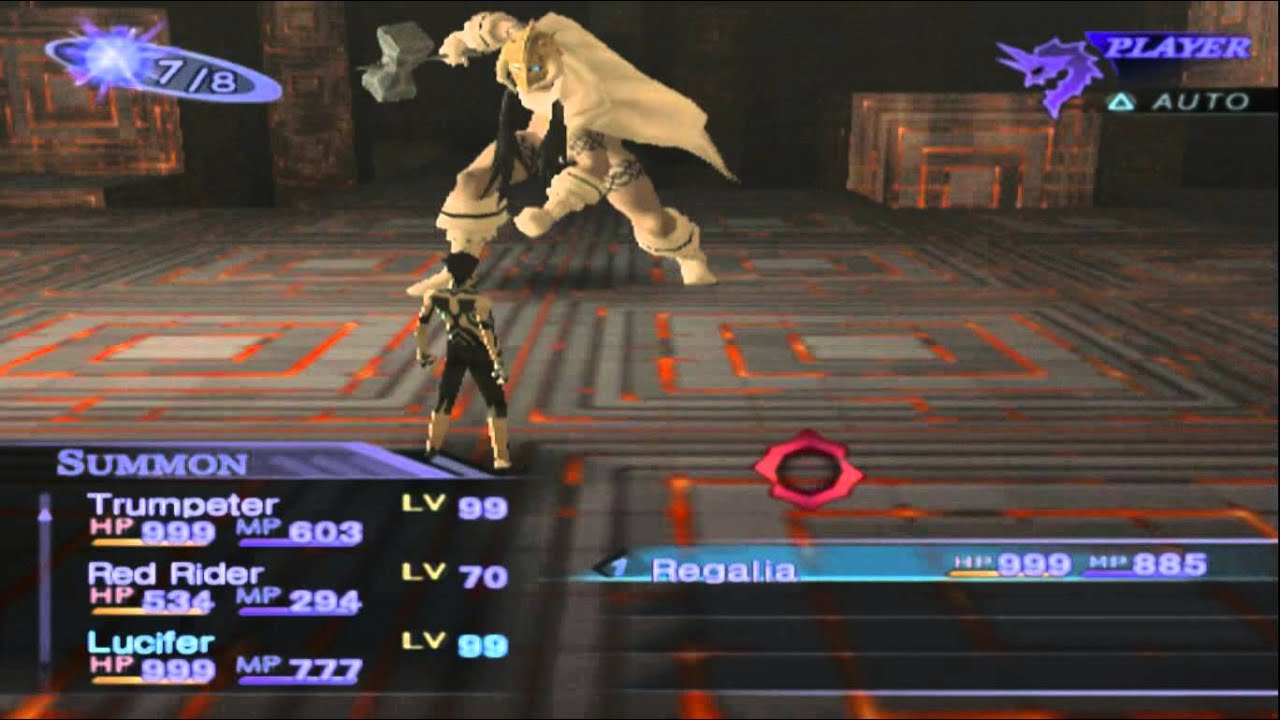
With Tokyo transformed into a Vortex World filled with demons, the Protagonist becomes instrumental to the schemes of the Reasons, beings who seek to remake the world in their image, and Lucifer, the lord of demons. The gameplay uses a turn-based battle system based on exploiting weaknesses, and a Demon recruitment system allowing the player to recruit demons found in the Vortex World to fight alongside them. The game was conceived after the completion of and, but was delayed as the team worked out what they wanted for the game, including making it appeal to a wider audience than previous Megami Tensei games. Unlike the science fiction setting of Shin Megami Tensei II, Nocturne returned to a contemporary setting similar to the original game. The setting and characters were inspired by multiple elements, including,, and modern popular culture. Among the things the team changed from previous entries were the camera perspective, which was switched from a first- to a third-person camera perspective, and using a cel-shaded art style to distinguish it from other games of the time.
The music, primarily composed by, paid homage to earlier Megami Tensei titles while drawing on music styles from the 1980s. The original edition of Nocturne released in Japan to strong sales and a positive critical reception, and the limited director's cut proved so popular that Atlus made a second print in response to fan demand. It also inspired a and in Japan. The director's cut was the version chosen for localization, making Nocturne the first mainline Shin Megami Tensei game to be released in the west. The game was well received by video game publications, who praised its gameplay and atmosphere while its challenging difficulty was often a subject of criticism. It was also announced to have been a commercial success in the West.
Contents • • • • • • • • • • • • • • • Gameplay [ ] Shin Megami Tensei: Nocturne is set in a post-apocalyptic version of modern-day: aside from the opening segment, post-apocalyptic Tokyo, also known as the Vortex World, is the main setting. From the outset, the player can select two difficulty settings: Normal and Hard. The player controls a who is given a name during the opening. Vanbasco Karaoke Download Gratis Italiano Per Windows.
Foxmail 7 Italiano Download Firefox. The player navigates the Vortex World through both a 2D world map, and to-scale 3D environments used in dungeons. While navigating the world map, the Protagonist's party and other non-player characters (NPCs), interactive objects and landmarks are represented by symbols: these objects and NPCs include containers holding items, spirits that will heal the party, and a globe in the bottom left-hand corner of the screen showing the party's approximate location on the world map. During dungeon navigation, the Protagonist navigates grid-based, multi-leveled areas. Different areas are accessed via doors, and as the Protagonist progresses the area is automatically mapped.
While exploring dungeons, the in-game camera can be freely rotated, and a 'Look' action allows the player to see environments in first-person. The game world can be navigated either on foot or by using a fast travel system unlocked at a certain point in the game. Multiple important locations are located within the world: these include Terminals that give access to a fast travel system; the Junk Shop, which acts as a vendor for buying and selling items; Rag's Jewelry, where gems collected during gameplay can be traded for rare items and unique demons; and the Fountain of Life, where the Protagonist and other party members can receive treatment for ailments, heal them of damage, or revive characters knocked out in battle.